Another Day in the Colony by Chelsea Watego
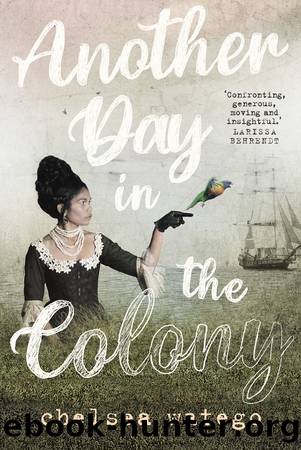
Author:Chelsea Watego [Watego, Chelsea]
Language: eng
Format: epub
Tags: political science, Colonialism & Post-Colonialism, Social Science, Indigenous Studies
ISBN: 9780702264870
Google: X_FDEAAAQBAJ
Publisher: Univ. of Queensland Press
Published: 2021-11-02T00:16:59.443523+00:00
5
ambiguously indigenous
They desired Indianness, not Indians. Indeed, admitting the existence of living Indians called vanishing ideology into question. Likewise, the presence of real native people revealed serious cracks in the idea that once could solidify a postrevolutionary national identity by assigning troublesome aspects of the Revolution to a commemorative Indian-American past ⦠Real Indian people both had â and had not â disappeared.
Philip J Deloria1
There is a new and rapidly emerging tribe among âthe native populationâ of so-called Australia. They speak of an Indigenous ancestry while being unable to name their ancestors, or Indigenous cousins even.2 Instead they talk of feelings of affinity and/or grainy black-and-white photographs of great-great-great-grandmothers who may have been. These pictures typically get unearthed during a time in their life when there is greater proximity to Indigenous bodies, often a time in their career when they once worked among âthe nativesâ from another place or having formed an intimate relationship with an Indigenous partner.
Those without photographs will whisper about whispers in the family about that great-great-great-grandparent who may have been one of those people, or the estranged dadâs dad who may have been but refuses to acknowledge any Indigenous ancestry; others will mention a deathbed confession to a family member several generations back. Some claim they have had a DNA test which proves they are âAboriginalâ. In the absence of tests, others tell stories of financial hardship or social dysfunction to authenticate their ancestry claims, even when that dysfunction relates to the white side of their family. Thatâs the function of dysfunction, I guess; even when not owned exclusively by Blackfullas, it can be used to claim proximity to us, ironically via white racialised imaginings of Black inferiority. In the absence of relationships to Blackness, imagined or actual, others join or form Aboriginal Facebook groups to seek out other members of their tribe, and, man, are they forming tribes online and offline!
Despite these newfound claims of Blackness, many of these people have grown up thinking of themselves as white, or maybe slightly âotheredâ, and for much of their life benefitted from a social location where they were known and seen as anything but Aboriginal. For all their claims of a past proximity, these people typically donât have stories of being socialised as Aboriginal. They often attribute this to some unknown and unnamed Aborigines they encountered at some point in their life, who allegedly deemed them âtoo white to be Blackâ. In almost every story of Aboriginal identity crisis, you can guarantee there is an Aboriginal character or characters who are framed as dysfunctional, angry, unwelcoming and violent, and to blame for their ongoing disconnection. Thus their identity crisis is seen not as a problem of their ancestry, ancestors or actions, but instead as the fault of those damn Aborigines, which ironically is the social group to which they are insisting they have membership.
The âangry Aborigineâ is invoked in order to avoid accountability to Indigenous peoples for not seeking to be in relationship with them, and there literally only needs to be one bad Black in such stories.
Download
This site does not store any files on its server. We only index and link to content provided by other sites. Please contact the content providers to delete copyright contents if any and email us, we'll remove relevant links or contents immediately.
| Anthropology | Archaeology |
| Philosophy | Politics & Government |
| Social Sciences | Sociology |
| Women's Studies |
Born to Run: by Christopher McDougall(7127)
The Leavers by Lisa Ko(6948)
iGen by Jean M. Twenge(5416)
Sapiens by Yuval Noah Harari(5372)
Spare by Prince Harry The Duke of Sussex(5197)
The Kite Runner by Khaled Hosseini(5180)
Machine Learning at Scale with H2O by Gregory Keys | David Whiting(4313)
Bullshit Jobs by David Graeber(4191)
Never by Ken Follett(3957)
Goodbye Paradise(3810)
Livewired by David Eagleman(3775)
Fairy Tale by Stephen King(3399)
A Dictionary of Sociology by Unknown(3085)
Harry Potter 4 - Harry Potter and The Goblet of Fire by J.K.Rowling(3074)
The Social Psychology of Inequality by Unknown(3031)
The Club by A.L. Brooks(2926)
Will by Will Smith(2920)
0041152001443424520 .pdf by Unknown(2846)
People of the Earth: An Introduction to World Prehistory by Dr. Brian Fagan & Nadia Durrani(2739)
